
Unusual Eggs in the Backyard Flock
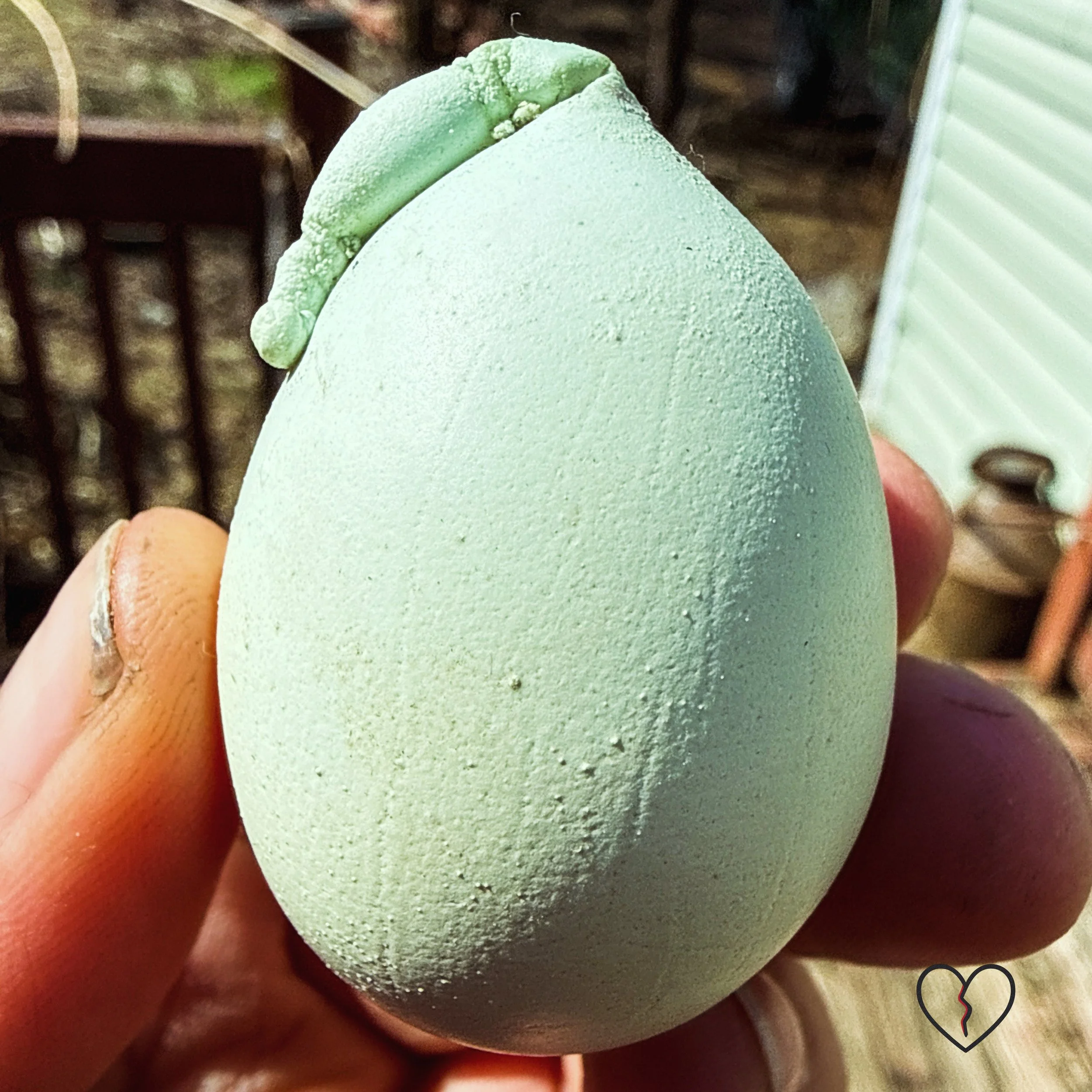
Every now and then, a chicken lays an egg that looks a little different. It might be misshapen, rough, ridged, extra small, extra large, or sealed at the tip like the one shown here. These eggs can look surprising, but they are a normal part of keeping chickens.
Egg formation is a process that happens inside the hen over about 24 to 26 hours. As the egg moves through the reproductive tract, layers are added one step at a time. The shell forms last, and that is where most visible variations happen. If something shifts slightly during that stage, the egg can come out with a different shape or texture.
Young hens that have just started laying often produce the most unusual eggs. Their systems are still adjusting to the rhythm of laying. Stress, weather changes, or even a small interruption during shell formation can also affect how the egg looks. Sometimes a hen deposits extra calcium at the end, which can create a sealed or folded tip.
We had a sudden cold snap two days ago. It went from 65 degrees to 23 degrees overnight, and it will be back up near 70 in a few days. Chickens are ruled by the sun and the weather, and those shifts can show up in their laying.
Color can also vary. Easter Eggers are known for their blue and green eggs, but even within one hen’s laying cycle, the shade can shift slightly depending on diet and health.
Most unusual eggs are safe and simply reflect the natural variability of the process. If the shell is intact and there are no signs of spoilage, it can be used like any other egg.
Keeping chickens means learning to expect a little variation. Even something as familiar as an egg can show small changes from day to day. It is a reminder that these are living systems, not machines, and each hen has her own rhythm.
#homesteadlife #backyardchickens #eastereggers #farmfresh #chickeneggs
