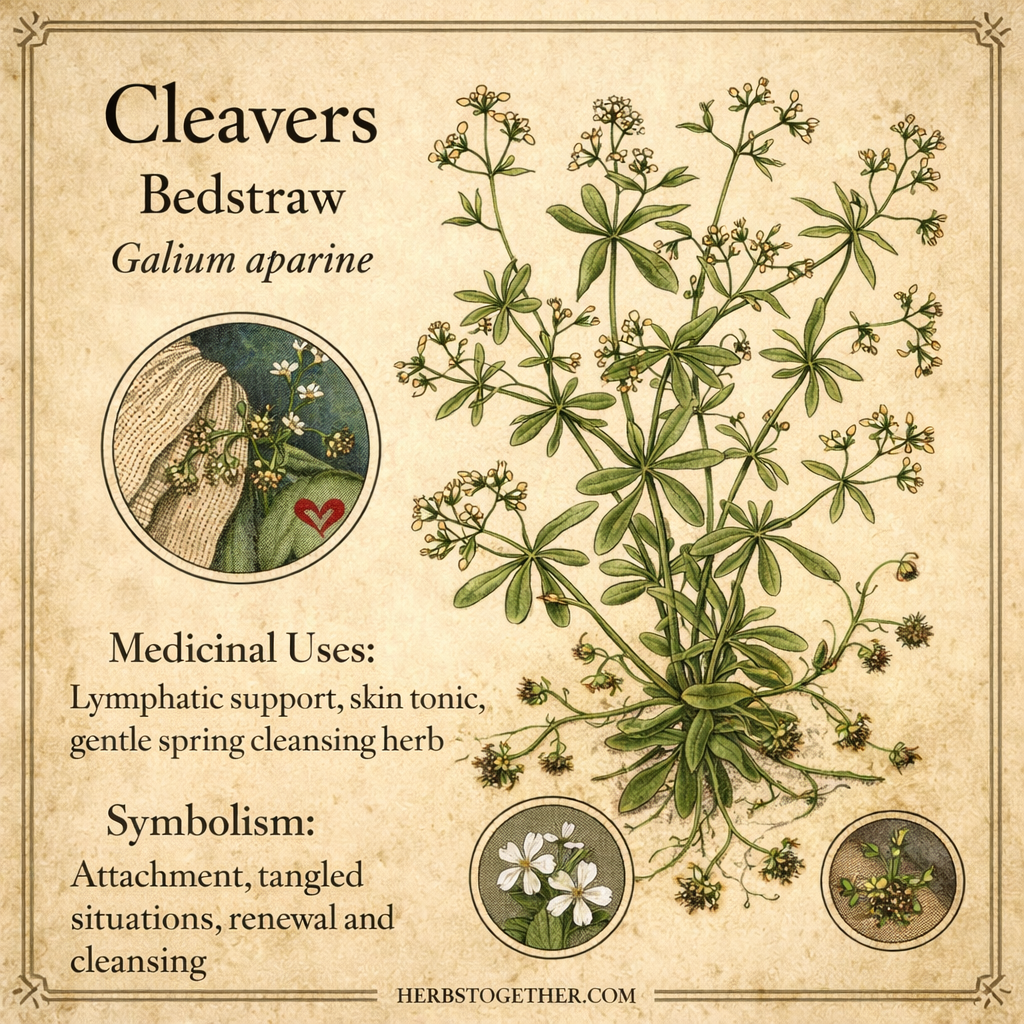
Cleavers: The Velcro Plant of Early Spring
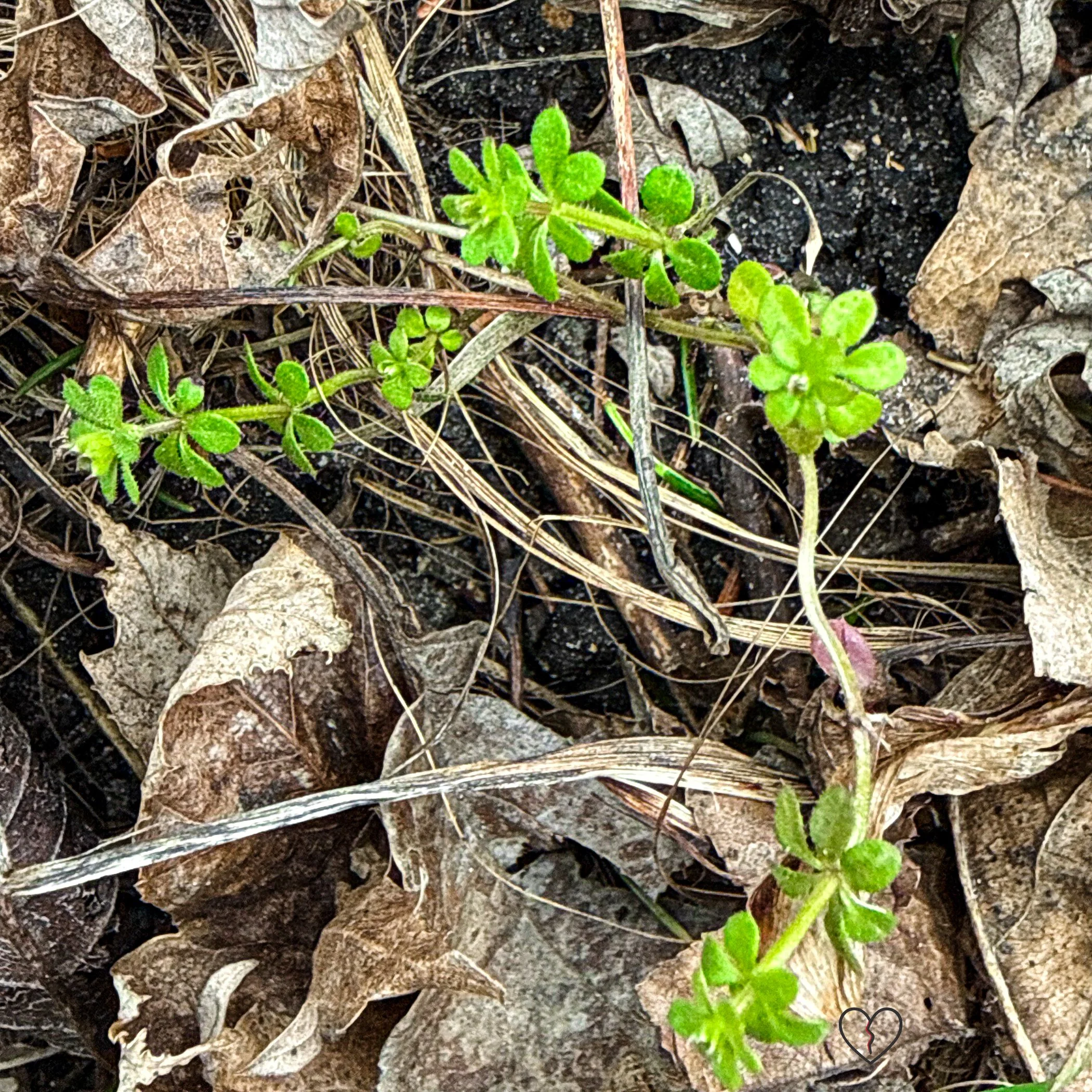
One of the small pleasures of early spring is noticing the first wild herbs returning to life. This week I found a patch of baby cleavers growing quietly along the edge of the yard.
When I was a kid we called this plant the Velcro plant. The nickname makes perfect sense once you pick it up. The stems and leaves are covered with tiny hooked hairs that cling easily to clothing, animal fur, and nearby plants. Walk through a patch of cleavers and it will happily attach itself to you.
The plant’s botanical name is Galium aparine. It grows widely across woodland edges, gardens, hedgerows, and disturbed soil. Cleavers often appears in early spring while the weather is still cool and the forest floor is still holding the memory of winter.
### Identifying Cleavers
Cleavers has a distinctive structure that makes it fairly easy to recognize once you know what to look for.
The stems are thin and flexible and tend to sprawl across the ground or climb gently over neighboring plants. Leaves grow in small circular whorls around the stem, usually six to eight leaves at each point. The leaves are narrow and slightly pointed.
If you run your fingers along the plant you will feel the tiny hooks that allow it to cling to almost anything it touches. These hooks help the plant climb upward through surrounding vegetation and later allow the seeds to travel on passing animals.
Later in the season cleavers produces tiny white star shaped flowers followed by small burr like seeds that cling just as easily as the leaves.
### Cleavers in Herbal Tradition
Cleavers has been valued for centuries as a gentle medicinal herb. Traditional herbalists often associate the plant with the lymphatic system, which helps move fluids and waste products through the body.
Fresh cleavers has traditionally been used to support healthy lymph movement, fluid balance, seasonal skin health, and general spring cleansing practices.
For many herbalists, cleavers is part of the tradition of cleansing the system of winter. After months of heavier foods and limited sunlight, early spring herbs were believed to help the body transition into the growing season again.
Cleavers is usually used fresh. Many people prepare it as a tea, infusion, or cold water preparation while the plant is young and tender.
One of my favorite ways to enjoy cleavers is very simple. I place fresh sprigs of the plant into cool water and leave the jar in the sun for several hours. The result is a mild herbal water that carries the green freshness of spring.
### Folklore and Magical Traditions of Cleavers
Cleavers appears frequently in European folk traditions and rural herbal lore. The plant’s sticky nature made it a natural symbol of attachment, connection, and loyalty.
Several small love divinations developed around the plant.
One tradition involved tossing a sprig of cleavers onto a lover’s back. If the plant clung to their clothing, the love was believed to be faithful. If the sprig slipped off and fell to the ground, the relationship was thought to be uncertain.
Another folk practice involved speaking the name of a desired partner while tossing cleavers against a wall or door. If the plant stuck to the surface, the match was considered promising.
Some traditions suggested placing cleavers beneath a pillow to invite dreams of a future lover. These dream charms were common in many rural folk practices, where plants were believed to reveal hidden knowledge through dreams.
Because the plant clings so easily, cleavers was also sometimes carried as a small charm connected to holding someone’s attention or strengthening attachment.
Beyond matters of love, cleavers was associated with cleansing and clearing, echoing its herbal use. Early spring herbs were thought to help clear both the body and the spirit after the heaviness of winter.
In some folk traditions, washing with early spring herbs like cleavers was believed to refresh the body and encourage renewal as the seasons shifted.
### Watching the Wild Herbs Grow
Right now the cleavers in my yard is still very young. The stems are soft and bright green, just beginning their spring climb through grasses and leaf litter.
One of the things I enjoy most about working with wild herbs is watching them through the entire season. Each plant changes as the weeks pass. Leaves expand, stems lengthen, flowers appear, and seeds form.
For now I am simply observing the patch and enjoying the first signs of the growing season.
Come back in a few weeks to see what I do with wild herbs once they have grown.