
Spruce Soda
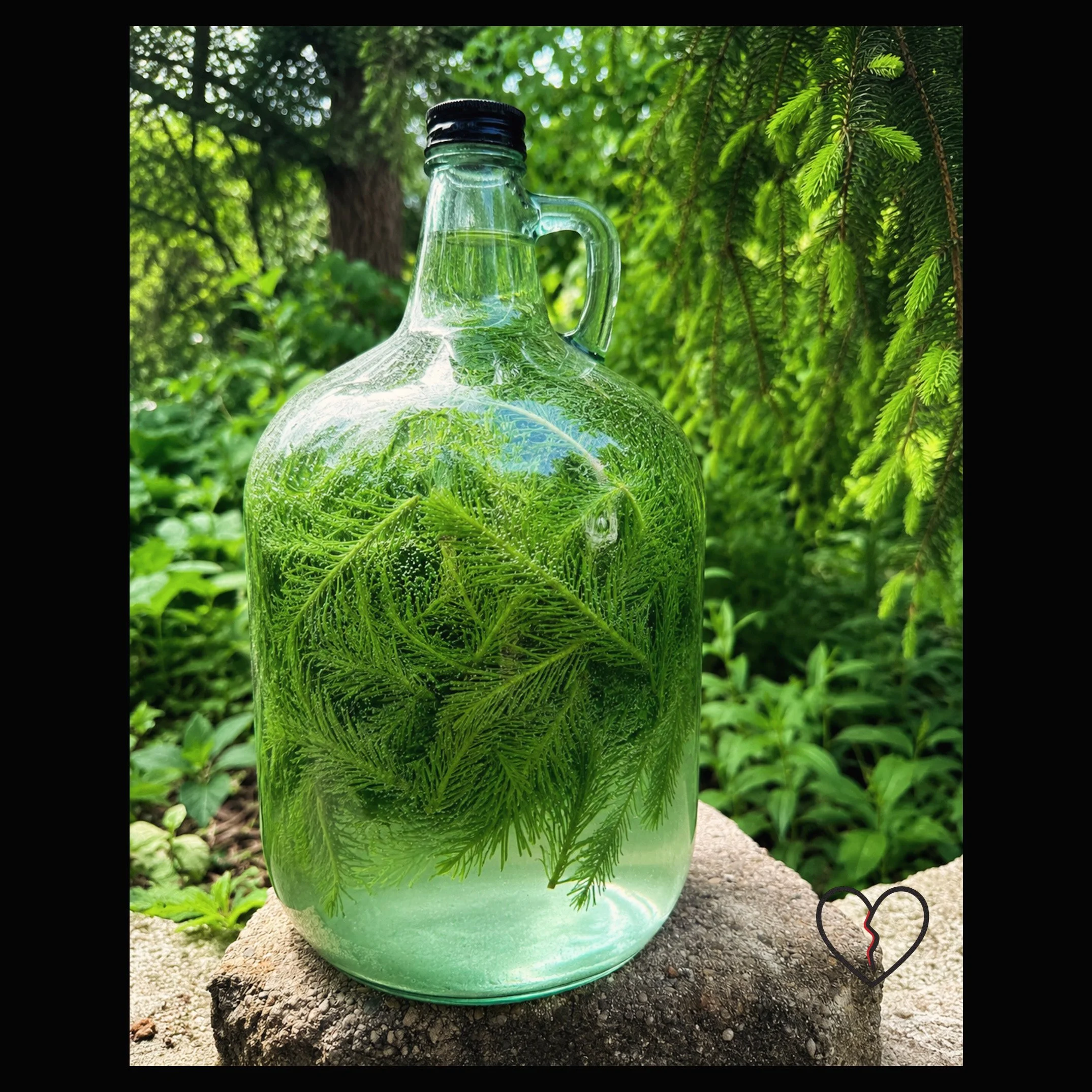
Each spring, my spruce trees begin to glow with bright green new growth. The soft neon-colored ends of the branches are called spruce tips, and for just a short window each year they are tender, flavorful, and edible.
Mature spruce and pine needles are usually too fibrous and tough to enjoy eating, but the young tips are completely different. They are soft, citrusy, slightly resinous, and full of nutrients. The flavor reminds me of lemon, evergreen, and grapefruit all at once.
For centuries, people have gathered spruce tips as food and medicine. They were especially important in colder regions where fresh fruits and vegetables were difficult to access after long winters. Spruce tips are naturally rich in vitamin C and contain aromatic compounds and antioxidants that have historically been associated with immune support and respiratory health.
One of the things that fascinates me most about wild food is how much abundance quietly exists around us. A tree that most people walk past without a second thought can suddenly become tea, syrup, jelly, infused honey, herbal vinegar, seasoning salt, or soda.
Today, I decided to make wild spruce tip soda.
I collected about four cups of fresh spruce tips from the trees around my property. When harvesting, I try to take only a small amount from each branch so that the tree can continue growing normally. The tips are easiest to identify in spring because they are a much brighter green than the older needles. The younger and softer the tips are, the better the flavor will be. Once they harden and darken, they become much tougher and more bitter.
The scent while harvesting them was incredible. My hands smelled like citrus and evergreen sap for the rest of the afternoon.
To make the soda, I placed the spruce tips into a large bottle with water and sugar. That is all that is really needed for a simple wild-fermented soda. The spruce tips themselves naturally carry wild yeast and microorganisms on their surface. Once combined with sugar and water, the yeast begins consuming the sugar and releasing carbon dioxide gas. That trapped gas is what creates carbonation.
This process is a natural fermentation, similar to the way ginger beer, kombucha, or old-fashioned root beers were traditionally made. The recipe is surprisingly simple: about four cups of fresh spruce tips, one to two cups of sugar, and one gallon of water. Some people also add lemon slices, orange peel, ginger, or herbs for additional flavor, but I wanted this batch to taste mostly like spruce.
Within a day or two, small bubbles should begin forming. In just a few days, the soda should become lightly fizzy, citrusy, and refreshing. The flavor is often compared to Sprite, but with a deep forest flavor underneath it.
Spruce tips were once an important survival food and medicinal plant. Explorers, sailors, and northern communities used spruce tea and spruce beer to help prevent scurvy because of the high vitamin C content. Evergreen trees also held symbolic importance in many cultures because they stayed alive and green during winter when other plants appeared dead. Because of this, spruce and pine became associated with endurance, resilience, continuity, and protection.
There is something deeply grounding about working with plants that people have relied upon for generations.
Not all evergreen trees are safe to consume. Some species, such as yew, are highly toxic. Always identify wild plants carefully before eating them.
Right now, my bottle is sitting on the counter beginning its slow transformation from sugar water into sparkling wild soda. In a couple of days, I should have a naturally carbonated drink made almost entirely from what was growing outside my door.
That still feels a little magical to me.
# Simple Spruce Tip Soda Recipe
## Ingredients
- 4 cups fresh spruce tips
- 1½ cups sugar
- 1 gallon non-chlorinated water
## Instructions
1. Place the spruce tips into a clean gallon jar or bottle.
2. Dissolve the sugar into warm water.
3. Pour the sugar water over the spruce tips and fill the rest of the container with water.
4. Leave a little space at the top for carbonation.
5. Cover loosely and leave at room temperature for 2–5 days.
6. Once bubbles begin forming, tighten the lid and burp the bottle daily to release pressure.
7. Refrigerate once the soda reaches your preferred level of carbonation.
## Variations
### Sweeter Soda
Use:
- 2 cups sugar
### Less Sweet Soda
Use:
- 1 cup sugar
### Stronger Spruce Flavor
Use:
- 6 cups spruce tips
### Milder Spruce Flavor
Use:
- 2 cups spruce tips
Optional additions:
- lemon slices
- orange peel
- ginger
- mint
Not all evergreen trees are safe to consume. Some species, such as yew, are highly toxic. Always identify wild plants carefully before eating them.
…….
In 2023 I moved from the city to become an artist and to learn self-sufficiency. To see what I’ve been up to, visit my website at: KristiYapp-woolalchemist.com
