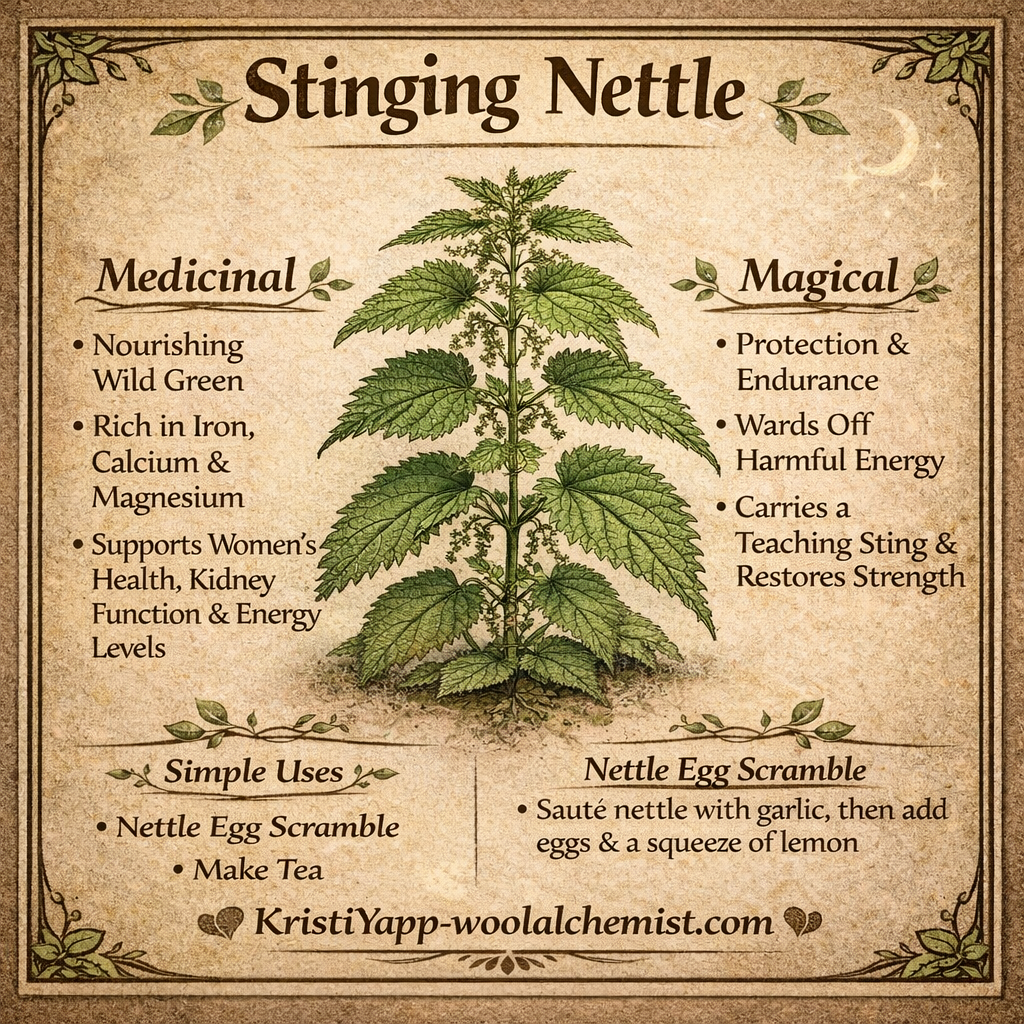
Stinging Nettle
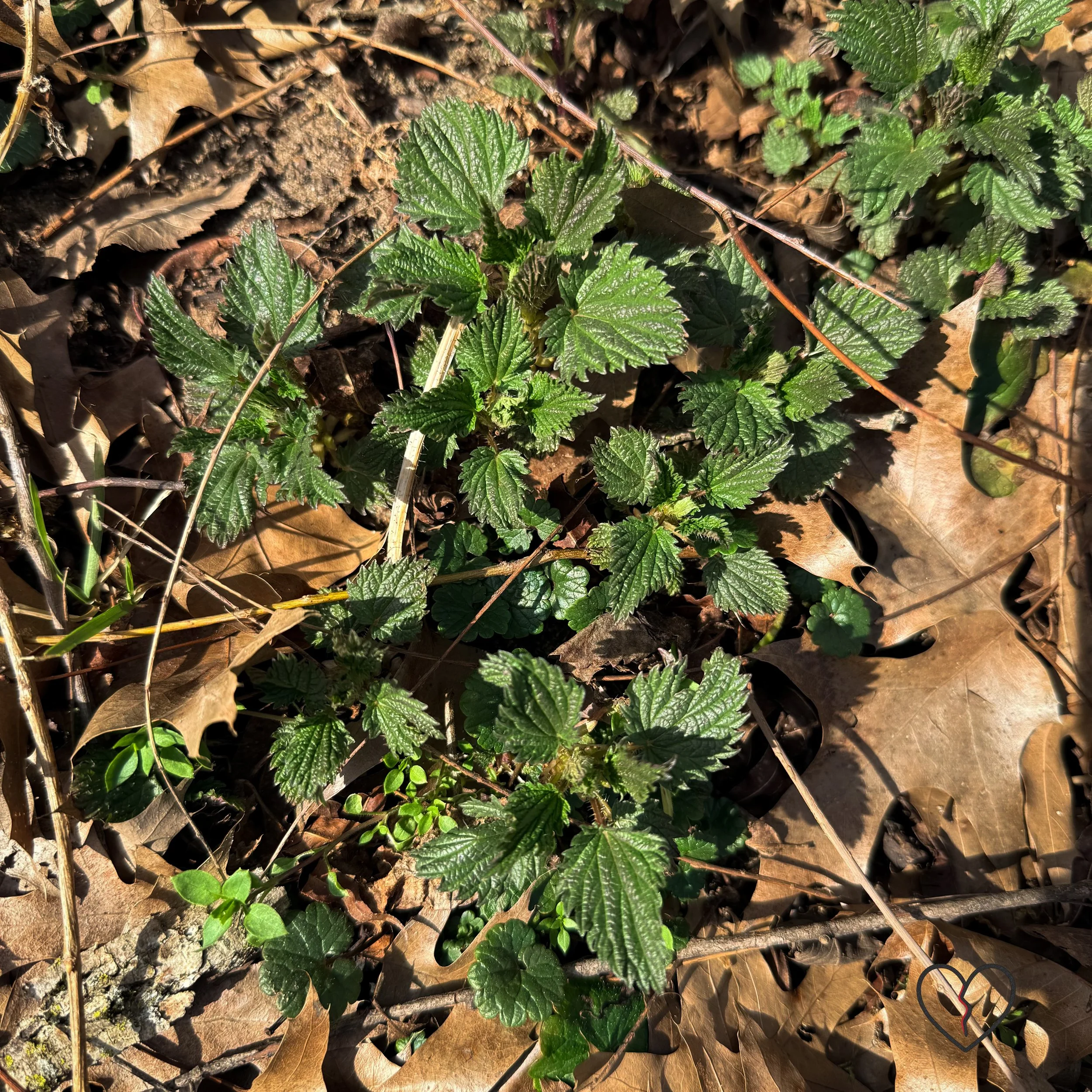
It is a beautiful day in Northwest Indiana. I went for a walk in the forest, where Pac-Man went for a swim and I listened to frogs enjoying the sunshine. Along the edge of the trail, pushing up through last year’s leaves, I found a healthy young patch of Stinging Nettle. I did not come across much nettle last year, so this felt like a true return.
Stinging Nettle, Stinging Nettle, is one of the most complete wild foods available in early spring. When the body is coming out of winter, often depleted and slow, nettle rises with exactly what is needed. It is rich in iron, calcium, magnesium, potassium, and chlorophyll. It carries protein for a leafy green. It rebuilds.
Traditionally, nettle has been used as a blood builder. It supports those who are low in iron and helps restore strength over time. It is deeply supportive for women. Nettle tea is used to nourish the body through cycles, replenish minerals, and support energy levels. Many herbalists turn to it during pregnancy and postpartum for its gentle but steady nutritional support. It also supports the kidneys and urinary system, helping the body move and process fluid more efficiently.
Nettle has also been used for seasonal allergies. There is something almost poetic in the way a plant that stings can help calm the body’s response. Taken as tea or infusion, it can support the immune system as the landscape shifts into spring.
Timing matters when harvesting. The best stage is right now, when the plants are young and tender, about 6 to 12 inches tall. Before flowering, the leaves are soft, vibrant, and ideal for food and tea. Once the plant begins to flower, the stems toughen and the leaves are less desirable for eating. Wear gloves when harvesting or working with nettle, as the fine hairs along the stem and leaves will sting on contact. Once dried, cooked, or steeped, the sting disappears completely.
In folklore, nettle has long been associated with protection and endurance. It is a plant that stands its ground. In parts of Europe, it was hung in doorways or placed near entry points to keep harmful forces out. It was believed to break negative patterns and create a boundary between the home and what should not enter.
There are stories of nettle being used in protective garments and even woven into cloth. It was seen as a plant that could carry strength into the body and into the space around a person. It offers truth and asks for respect, and in return, it gives resilience.
Nettle also carries a quiet teaching. It reminds us to pay attention to how we move through the world and how we engage with what is living around us. The sting fades quickly. The lesson remains.
One of the most accessible ways to work with nettle is as a tea or infusion.
To make nettle tea, harvest young leaves and rinse them well. You can use them fresh or dried. Place a small handful of fresh nettle or one to two teaspoons of dried nettle into a cup. Pour hot water over the leaves, cover, and let steep for 10 to 15 minutes. For a stronger mineral infusion, use a larger amount of nettle and let it steep for several hours or overnight. Strain and drink. The flavor is deep and green.
My favorite way to eat nettles is with eggs, but there are many ways to bring them into the kitchen.
Nettle Soup:
Harvest and blanch the nettle to remove the sting, then chop. In a pot, sauté onion and garlic in butter or olive oil. Add chopped potatoes and cover with broth. Simmer until the potatoes are soft. Add the nettle and cook for a few minutes. Blend until smooth. Finish with salt and a splash of cream if desired.
Nettle Pesto:
Blanch the nettle briefly, then squeeze out excess water. Blend with garlic, nuts or seeds, olive oil, and a hard cheese if you use it. Add a pinch of salt and a squeeze of lemon. This pesto can be used on bread or stirred into pasta.
Each time I find nettle, I am reminded that the land provides in cycles. What was scarce one year returns the next. What is needed rises at the right time. It asks for attention. It asks for participation.