Plantain
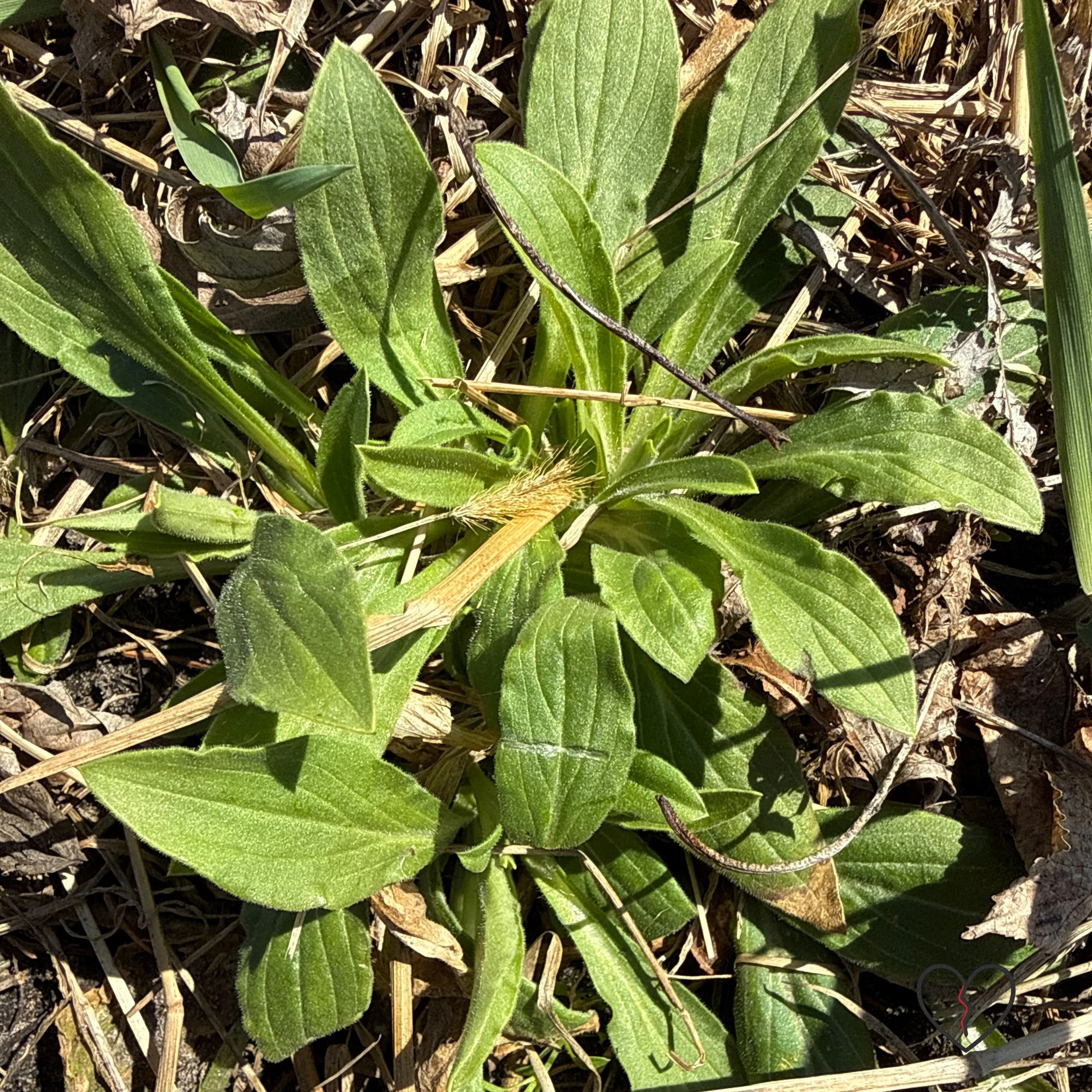
Plantain grows quietly in places that are left alone. In yards that have not been treated with chemical herbicides, it appears without effort. It settles into the soil and spreads outward in low clusters. Once you learn to recognize it, you begin to see it everywhere.
It is easy to identify by its long, narrow, thick leaves and the tall stalks that rise from the center. The leaves grow in a rosette close to the ground. The stalk carries a seed head that resembles a slender spike. On my own homestead, I have found more than one variety over the past two seasons. Each one holds the same steady presence and the same usefulness.
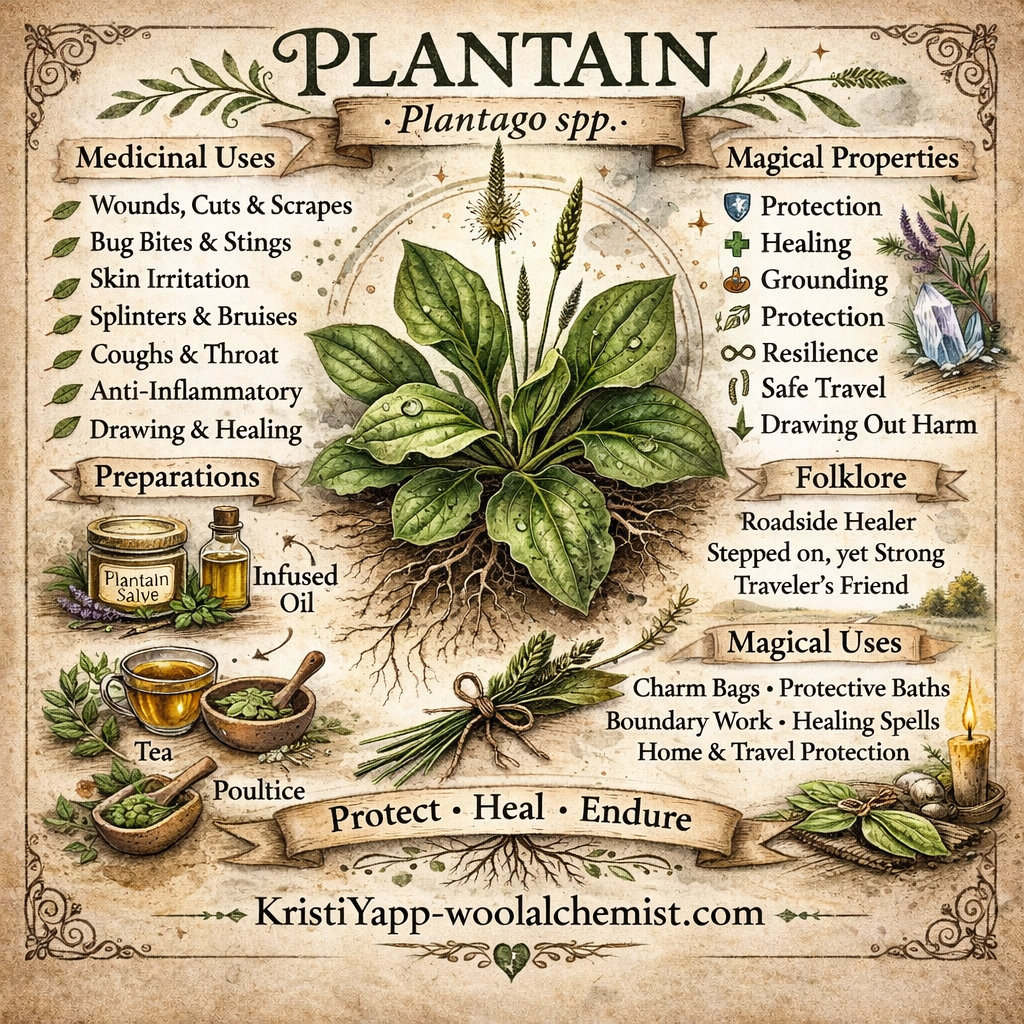
Plantain has a long history as a plant used for first aid. It is one of the most accessible remedies for everyday injuries. When skin is cut, scraped, burned, or irritated, plantain can be used right away. The leaves can be picked fresh, chewed, and placed directly onto the skin. This simple preparation allows the plant to begin working immediately. It helps soothe the area, cool the skin, and draw out what does not belong.
This practice requires no tools and no preparation beyond what is already present. The plant grows where people walk, work, and live. It has a way of being close when it is needed.
Plantain can also be prepared and stored for later use. Fresh leaves can be infused into oil over time. This oil can then be used to make salves that support the skin. These salves are useful for dry skin, small wounds, and areas of irritation. Dried leaves can be used to make tea. This tea has been used to support the body and to soothe internal irritation. The leaves can also be added to bath water, where they come into contact with the skin in a broader way.
Each method of preparation carries the same core function. The plant supports the body by calming and drawing. It works in a direct and steady manner.
There is also a long tradition of understanding plantain through its energetic qualities. In this context, it is seen as a plant of protection and repair. It is often associated with grounding, resilience, and the ability to endure. It has been used in charm bags and simple protective work, especially for those who spend time on the road or working outside.
The structure of the plant reflects this role. It grows low to the ground and remains in place even when stepped on. It continues to return and spread. There is a lesson in that pattern. Plantain does not require special conditions to survive. It works with what is present and continues forward.
On a homestead, this kind of plant becomes part of daily life. It is something that can be gathered without planning. It is something that can be used without complication. Over time, it becomes familiar. It becomes part of a rhythm that is based on observation and response.
There is value in knowing the plants that grow underfoot. There is value in recognizing what is already available. Plantain offers a clear example of this. It is a plant that serves a purpose, remains accessible, and continues to show up.